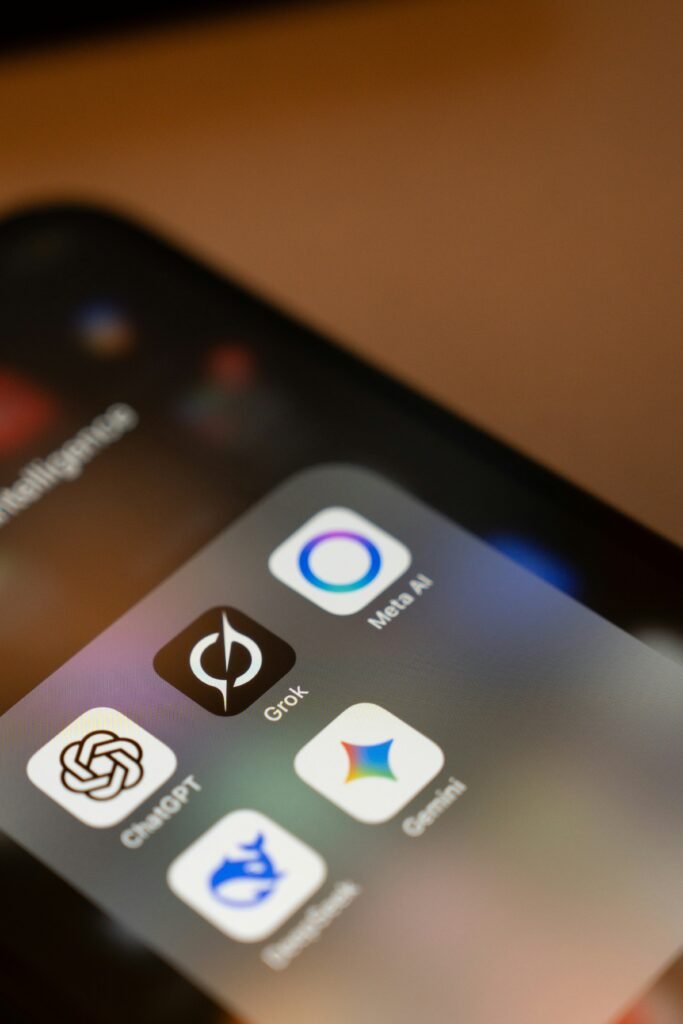
AI has already reshaped the last two years, but 2026 is shaping up to be a turning point. Several emerging tools are gaining momentum quietly — not mainstream yet, but showing strong early adoption signals among developers, creators, and businesses.
This list is not hype. It’s based on real usage patterns, community movement, and product roadmaps.

🥇 1. DeepSeek R1 — The Efficiency Revolution
💡 Type: Reasoning‑focused LLM ⚡ Why it will grow: Extremely low cost + high speed 👥 Who’s adopting: Developers, automation teams, startups
DeepSeek R1 is already disrupting the market with its efficiency‑first approach. It’s not built for creativity — it’s built for logic, coding, and automation. In 2026, its API adoption is expected to skyrocket.
Pros
✔️ Very fast ✔️ Very cost‑efficient ✔️ Strong for coding and reasoning
Cons
❌ Weak creativity ❌ Smaller ecosystem
Verdict
One of the most aggressively growing AI tools of 2026.

🥈 2. OpenAI Sora (Full Release)
💡 Type: Text‑to‑Video 🎥 Why it will grow: Video generation becomes a real industry 📈 Who’s adopting: Agencies, creators, brands
Sora’s full release is expected in 2026, and it will redefine video production. Short ads, product demos, training videos — all generated from a single prompt.
Pros
✔️ Highly realistic video output ✔️ Storyboard‑to‑video workflows ✔️ Huge value for brands
Cons
❌ Expensive ❌ Requires strong hardware for best results
Verdict
The biggest shift in video creation since editing software went digital.

🥉 3. Google Gemini Ultra 2
💡 Type: Multimodal AI 🌍 Why it will grow: Deep Google ecosystem integration 📱 Who’s adopting: Android users, researchers, students
Gemini Ultra 2 pushes multimodality further — text, images, audio, video, all processed by a single model. Its integration with Google Workspace will make it a default tool for millions.
Pros
✔️ Excellent multimodal performance ✔️ Strong research and summarization ✔️ Native Google integration
Cons
❌ Region‑restricted features ❌ Works best inside Google’s ecosystem
Verdict
Likely to become the default AI assistant for Google users in 2026.

🧠 4. Anthropic Claude 4.1
💡 Type: Long‑context reasoning 📚 Why it will grow: Massive context window (1M+ tokens) 🔍 Who’s adopting: Analysts, researchers, legal teams
Claude 4.1 is built for deep analysis. Books, reports, contracts, technical documents — it handles them in a single pass.
Pros
✔️ Huge context window ✔️ Excellent analytical reasoning ✔️ Stable and reliable
Cons
❌ Not ideal for creative tasks ❌ Limited availability in some regions
Verdict
The go‑to AI for professional analysis in 2026.

🎨 5. Midjourney v7
💡 Type: Image Generation 🎨 Why it will grow: More realism, more control, faster output 👨🎨 Who’s adopting: Designers, brands, creators
Midjourney v7 is expected to deliver sharper details, better lighting, and more realistic faces. It remains the top choice for artistic and commercial visuals.
Pros
✔️ Best artistic quality ✔️ More realistic faces ✔️ Faster rendering
Cons
❌ Still tied to Discord ❌ Expensive for commercial use
Verdict
The strongest visual generation tool heading into 2026.
📊 Summary Table
| Tool | Category | Why It Will Explode |
|---|---|---|
| DeepSeek R1 | Reasoning | Speed + cost advantage |
| Sora | Video | Text‑to‑video revolution |
| Gemini Ultra 2 | Multimodal | Google integration |
| Claude 4.1 | Analysis | Massive context window |
| Midjourney v7 | Image | Best visual quality |
🧠 Final Thoughts
2026 is the year AI tools move from “experiments” to core workflow infrastructure. These five tools show the strongest early signals — not hype, but real momentum.