Latest and Upcoming Graphics Cards: Complete Guide to 2025-2026 GPU Releases
Latest and Upcoming Graphics Cards: Complete Guide to 2025-2026 GPU Releases
If you’re in the market for a new graphics card, 2025 has been an exciting year, and 2026 promises even more innovation. Both Nvidia and AMD have launched new GPU generations that bring significant improvements to gaming performance, ray tracing capabilities, and AI-powered features. Let’s dive into everything you need to know about the latest graphics cards and what’s coming next.
Nvidia RTX 50 Series: The Blackwell Architecture Revolution
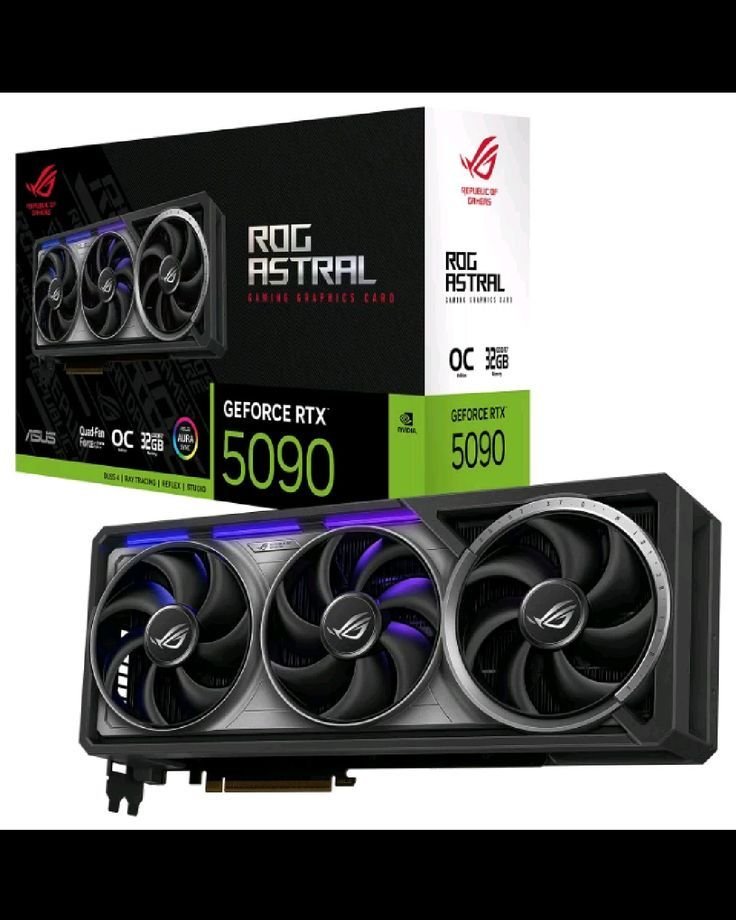
Nvidia kicked off 2025 with a bang by unveiling the GeForce RTX 50 series at CES in January. Built on the groundbreaking Blackwell architecture, these cards represent a major leap forward in graphics technology.
Key RTX 50 Series Models
The flagship RTX 5090 is an absolute powerhouse designed for enthusiasts who want the best performance money can buy. With a massive 32GB of GDDR7 memory and bandwidth reaching 1.7 TB/s, this card delivers exceptional 4K gaming performance. It features 170 RT cores for ray tracing and 680 Tensor cores for AI workloads. However, there’s a catch – it draws a whopping 575W of power and comes with a premium price tag that puts it out of reach for most gamers.
The RTX 5080 launched at $999, maintaining the same price point as the previous RTX 4080 Super. While it shares the same attractive design as the 5090, reviewers noted that the generation-on-generation performance improvement over the RTX 4080 Super is relatively marginal. Still, with DLSS 4 and Multi Frame Generation (MFG) technology, it provides a solid high-end gaming experience.
For gamers looking for great value, the RTX 5070 Ti has received praise as the sweet spot in the lineup. Priced lower than its predecessor at under $799, it offers meaningful performance improvements and comes with 16GB of GDDR7 memory. It features 8,960 CUDA cores, 280 Tensor cores, and 70 RT cores, making it excellent for 1440p and 4K gaming.
The RTX 5070 received mixed reviews for offering only marginal improvements over the RTX 4070 Super, sometimes even trailing its predecessor in performance. With just 12GB of VRAM, many feel it’s insufficient for the price point. However, as of August 2025, it became the most popular current-generation GPU on Steam’s hardware survey.
DLSS 4 and AI Features
One of the biggest innovations in the RTX 50 series is DLSS 4, which uses transformer-based AI for super resolution and supports 4X Multi Frame Generation. Over 250 games and applications already support DLSS 4, making it Nvidia’s most rapidly adopted gaming technology. At CES 2026, Nvidia announced DLSS 4.5, continuing to push the boundaries of AI-powered rendering.
Challenges Facing RTX 50 Series
Keep an eye on stock availability and pricing, as the memory shortage situation continues to evolve. Whatever you choose, both Nvidia and AMD have delivered graphics cards that can handle modern games at high settings with impressive frame rates, ensuring great gaming experiences for years to come.
Unfortunately, the launch hasn’t been entirely smooth. Memory shortages affecting GDDR7 production have caused supply constraints and price increases. Some RTX 5090 and 5080 cards shipped with manufacturing defects affecting render output units. Additionally, early drivers had stability issues causing black screens and graphical corruption, though Nvidia has released multiple fixes.
AMD Radeon RX 9000 Series: RDNA 4 Takes on the Mainstream
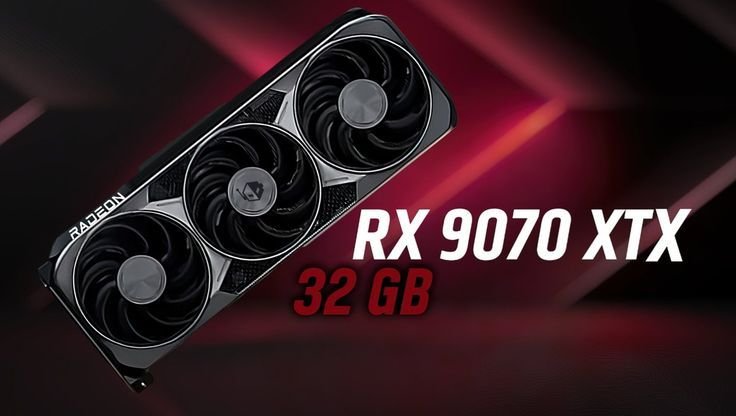
AMD took a different approach with their RDNA 4 architecture, focusing on the mainstream market rather than competing at the ultra-high-end. The strategy appears to be paying off, with strong reviews praising the value proposition.
RX 9000 Series Specifications
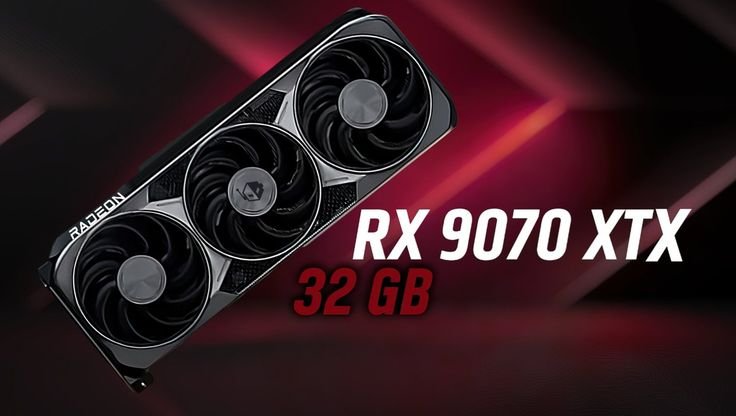
The Radeon RX 9070 XT launched in March 2025 at $599 and has emerged as one of the best GPUs of 2025. Built on the Navi 48 chip, it features 64 compute units with 4,096 stream processors, 16GB of GDDR6 memory on a 256-bit bus, and 64MB of Infinity Cache. With a power draw of 304W, it competes directly with Nvidia’s RTX 5070 and 5070 Ti while offering excellent rasterization performance.
The RX 9070 at $549 uses a slightly cut-down version with 56 compute units and draws just 220W of power. Both cards excel at high-refresh 1440p gaming and entry-level 4K gaming, making them perfect for most gamers’ needs.
AMD also released the RX 9060 XT in June 2025, available in both 8GB ($299) and 16GB ($349) configurations. With 32 compute units and 2,048 stream processors, it targets maxed-out 1080p and entry 1440p gaming. The 16GB version offers significantly better value and future-proofing.
RDNA 4 Architecture Improvements
RDNA 4 brings substantial upgrades over RDNA 3. The third-generation ray tracing accelerators double ray tracing performance, while second-generation AI accelerators provide up to 8x throughput for sparse INT8 operations. These AI accelerators enable AMD’s new FidelityFX Super Resolution 4 (FSR 4), which uses machine learning for superior upscaling quality compared to FSR 3.1.
The architecture also includes an updated Radiance Display Engine supporting DisplayPort 2.1a and HDMI 2.1b, plus an Enhanced Media Engine for improved streaming and content creation performance.
Why the RX 9070 XT Is a Winner
Many reviewers crowned the RX 9070 XT as the premier GPU of 2025. It delivers strong rasterization performance at a compelling price point, rivals the RTX 5070 Ti in throughput, and includes 16GB of VRAM for excellent longevity. While ray tracing performance trails Nvidia’s offerings, the raw gaming performance per dollar is outstanding.
Intel Arc Battlemage: The Budget Champion
Don’t sleep on Intel’s Arc B-series GPUs. The Arc B570 offers 10GB of GDDR6 memory on a 160-bit bus, providing a significant advantage over budget cards stuck at 8GB. Intel has addressed early Arc platform issues, including CPU overhead problems, making these cards much more compatible with various system configurations. For budget builders seeking solid 1080p performance, the B570 represents excellent value.
Future GPU Releases: What’s Next?
Looking ahead, the GPU landscape remains somewhat uncertain due to ongoing memory shortages affecting both Nvidia and AMD.
RTX 60 Series on the Horizon
According to reliable leaker Kopite7kimi, Nvidia’s RTX 60 series based on the Rubin architecture is expected to launch in the second half of 2027. These will use GR20x dies and represent the next major architectural leap. However, the timeline could shift if memory shortages continue.
There’s speculation about RTX 50 Super series cards arriving in early 2026, though Nvidia made no announcements at CES 2026, likely due to the memory shortage situation.
AMD’s Future Plans
AMD hasn’t announced specific plans for higher-end RDNA 4 cards or the next-generation RDNA 5 architecture. Some rumors suggest AMD might develop high-end RDNA 5 GPUs to compete with Nvidia’s RTX 6090, but nothing is confirmed.
Current Market Conditions and Buying Advice
The GPU market in early 2026 faces unique challenges. The AI boom has diverted significant silicon production to data center accelerators, leaving gamers with limited supply. Both Nvidia and AMD are prioritizing AI products, which means gaming GPUs often sell above MSRP when available.
Despite these challenges, late 2025 and early 2026 represent one of the better times to buy a graphics card before potential price increases. Here’s what to consider:
For 4K Gaming: The RTX 5090 offers unmatched performance but at extreme cost. The RTX 5080 or RX 9070 XT provide more reasonable options for high-quality 4K gaming.
For 1440p Gaming: The RX 9070 XT and RTX 5070 Ti represent the sweet spot, offering excellent performance with 16GB of VRAM for future-proofing.
For 1080p Gaming: The RX 9060 XT (16GB version) and Intel Arc B570 deliver outstanding value. The RTX 5060 and 5060 Ti are options but face criticism for limited VRAM on budget models.
Power Efficiency: AMD’s RDNA 4 cards generally draw less power than Nvidia equivalents, which can mean lower electricity bills and less demanding cooling requirements.
Ray Tracing Priority: If ray tracing performance is crucial, Nvidia’s RTX 50 series with fourth-generation RT cores holds a clear advantage.
AI Features: Both DLSS 4 and FSR 4 offer impressive upscaling and frame generation, though DLSS 4 currently has broader game support with over 250 compatible titles.
Final Thoughts
2025 has delivered exciting new graphics cards from all major manufacturers. Nvidia’s RTX 50 series pushes performance boundaries with Blackwell architecture and advanced AI features. AMD’s RDNA 4 cards offer exceptional value in the mainstream segment with strong rasterization performance. Intel’s Arc Battlemage provides budget-conscious gamers with competitive options.
While supply constraints and pricing challenges persist, the current generation offers meaningful improvements in ray tracing, AI acceleration, and overall gaming performance. Whether you prioritize raw power, value, or efficiency, there’s likely a new GPU that fits your needs.